.png)
Showing posts with label Social status. Show all posts
Showing posts with label Social status. Show all posts
Sunday, August 27, 2023

Friday, August 25, 2023
India(Contemporary)
.jpg) |
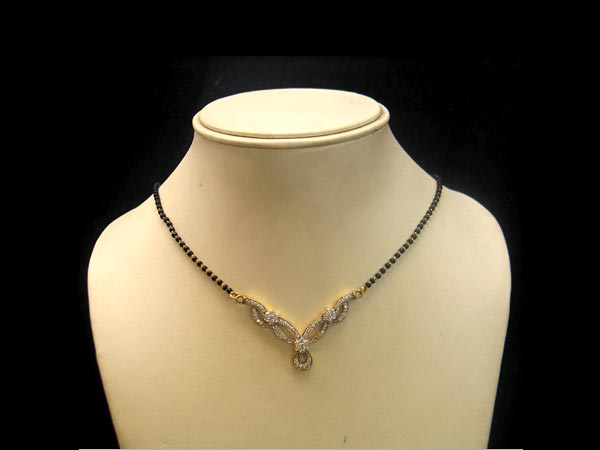
| Mangalsutra necklace |
This sacred necklace is usually made out of a thread, small black beads with a locket. The pendant is made out of gold and diamonds.
According to Hindu culture, mangalsutra is worn by women. The necklace is a part of a wedding ceremony in India. Wearing a mangalsutra signifies a certain rank, which means if she is wearing this necklace it simple shows her marital status. It is believed that a women should wear this piece throughout her life as long as they are married(Accessed 18 September 2023.para 3).
.png)
Zulu(Contemporary)
 |
| Umgexo Zulu love letter |
Umgexo is made out of beads and nylon string. As someone who has worked with beads before I would say this is brick stitch. Hence there are beads overlapping on both sides.
Traditionally in a Zulu culture, if someone is wearing a beaded piece it mostly indicates a certain status. For example, in the above image the necklace in the middle indicates marital status. Nonetheless, if a Zulu women is wearing a diamond shape formed of two beaded triangles it shows that she is married. Also when the two tips of the triangles meet in the middle, it means a married man.
.png)
Xhosa(Contemporary)
 |
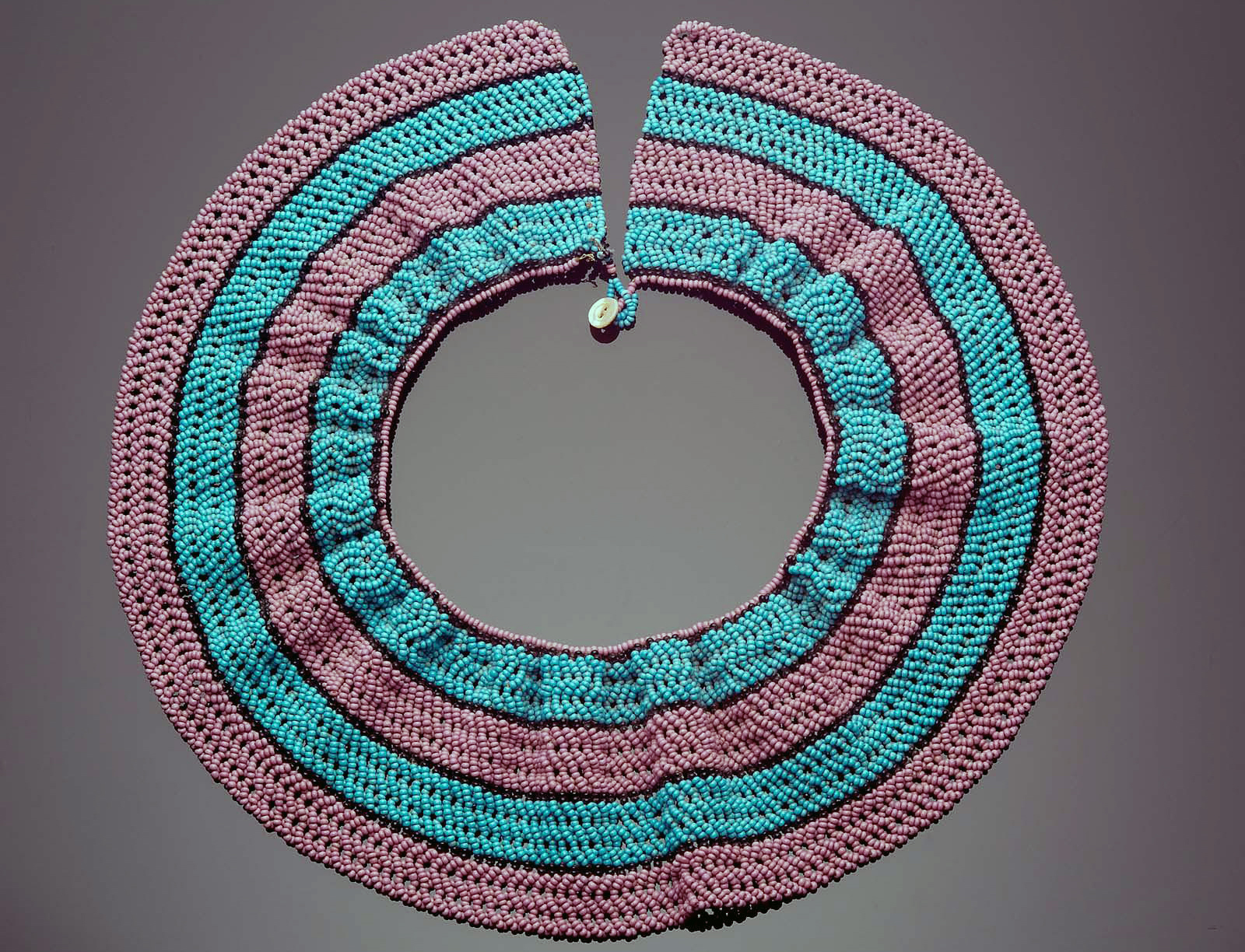
| Beaded collar iNgqhosha |
This collar is made out of glass beads and a mother-of-pearl button. The pearl serves as a clasp. The beads are threaded and woven together to form a flat, semi-circular beaded collar.
Among the Xhosa culture, there is a specific necklace that indicates one's social status which is called iNgqhosha. A similar beaded collar(iNgqhosha) was worn by the late former South African president ''Nelson Mandela'', which somehow conveyed his royal status. To mark the social rank of an individual in society was based on the use of patterns and colors of beads. However, this necklace is worn by both men and women in isiXhosa culture.
.png)
Ndebele(Historical)
 |
| iJogolo apron |

Turkmen Historical
 |
| Sinsile headdress Crown |
This crown is made out of various materials such as silver, silver shot, table-cut carnelians, turquoise beads, and gilded chains. In my point of view, the technique that was used in this headpiece for the carnelians is a rub-over setting and how the loop-in-loop is soldered on the crown to hold the dangling chains with teardrop-shape pendants. From ancient times jewellery made by Turkmen craftsmen was mostly handmade.
According to art historian Layla Diba, ''Jewellery was used as a way to establish one's rank in Turkmen society''. In this case, the Sinsile piece was worn by young girls in daily life to indicate their marital status. Perhaps this specific headdress is for unmarried women of Turkmen culture.
Thursday, August 24, 2023
.png)
Egypt(Historical)
 |
| Miniature Broad Collar |
The broad collar is semi-circular and it belongs to the “broad collar” family. According to Chi Yan Joanne Pang, the entire collar is plated or made out of gold, with a total of six bands of stones and decorations, leading up to a lotus flower that leads to the hooks of the collar’s necklace.
Starting
from the outermost band, there is a series of droplet beads on the necklace, with their
outlines forged in gold or soldered sheets. The insides of the droplets are
filled with turquoise, while lapis lazuli was used to fill in the triangular
gaps between each teardrop.
The next
band consists of a series of lotus flowers, also lined in gold, bearing a
design similar to the lotus flower at the end of the bands. Each flower has
five petals, with the outer ones filled with lapis lazuli and the inner petals
with turquoise. They alternate with golden lotus buds. The spaces between all
the lotuses are filled with carnelian.
The third
band is composed of gold-lined turquoise rosettes, each with a golden center.
Lapis lazuli was used to fill in the gaps between the rosettes. The fourth
row is made up of gold-lined papyri filled with turquoise and lapis lazuli.
There is no definitive pattern as to where these two are placed within the
papyrus. They also alternate with small golden buds, and the gaps are filled
with carnelian.
Wednesday, August 23, 2023


Monday, August 21, 2023
Ancient Rome
 |
| Roman ring |
The materials used to make this ring are gold and bloodstone. The most common type of signet ring during this period had a motif engraved onto a gemstone. On the left, the ring depicts Hermes, and on the right the figure of Mars. Most
male fingerrings had a specific function. These were signet rings used as a
form of royal mark by higher-ranking officials. It was easy to identify the status of an individual who was wearing a specific ring. The engraved gem would be pressed into wax, impressing the shape of the image carved into its surface. Rings were worn as a mark of your identity and status.
Subscribe to:
Posts (Atom)